

-
Brushing twice daily with fluoride toothpaste is essential for optimal plaque control and significantly lowers the risk of cavities and gum disease compared to brushing just once a day.
-
Nighttime brushing is especially important, as reduced saliva flow during sleep leaves teeth more vulnerable to bacterial acids and plaque buildup.
-
Busy families can maintain healthy smiles by prioritizing consistent routines, using time-saving tools, and scheduling regular professional cleanings for comprehensive oral health.
Here's something that might surprise you: plaque starts rebuilding on your teeth within just 12 hours of brushing. That convenient once-a-day routine you've been considering? It gives bacteria plenty of time to produce acids that can gradually weaken enamel and irritate your gums.
Is brushing once a day enough for your family's oral health? The short answer is no. Research from the American Dental Association shows that brushing twice daily with fluoride toothpaste, combined with daily flossing, significantly reduces your risk of cavities and gum disease compared to brushing just once. Understanding how your oral microbiome workscan help you make the best choices for your family's smiles. We'll share practical, time-saving strategies that work for busy families like yours. For comprehensive dental care that fits your schedule, trust Palmetto Dental Arts to help protect every smile in your family.
Why Dentists Recommend Brushing Twice a Day
Do dentists recommend brushing twice a day or is once enough? The answer comes down to how your mouth works around the clock. Plaque doesn't take breaks, and neither should your oral care routine. Understanding what happens between brushings helps explain why twice daily is the gold standard for keeping your family's smiles healthy.
Plaque Never Stops Building
Bacteria in your mouth form a sticky film called plaque within hours of your last brush. This bacterial buildup produces acids that attack tooth enamel and irritate gums. The American Dental Association recommends brushing every 12 hours to disrupt this process before acids can weaken your enamel. Think of it like washing dishes—waiting too long makes the job much harder.
Even More Concerning Is What Happens at Night
Your saliva flow drops significantly during sleep, leaving your mouth more vulnerable to bacterial acids. The NHS emphasizes brushing last thing at night for this reason. Without that protective saliva rinse, plaque acids linger for hours. Skipping your bedtime brush is like leaving food out overnight—bacteria have a feast while you rest.
The Real Cost of Once-Daily Brushing
Patients who brush only once daily consistently show higher plaque levels, especially between teeth and along the gum line. This translates to more cavities, bleeding gums, and morning breath over time. While once is better than never, it leaves too much bacterial buildup behind. That's why comprehensive preventive care focuses on consistent twice-daily routines that work with your body's natural rhythms.
What Happens If You Only Brush Once Daily? A Practical Comparison
When you're juggling family schedules, it's natural to wonder what happens if you only brush your teeth once daily versus maintaining a more frequent routine. Comparing these approaches reveals important differences in plaque control, cavity risk, and gum health.
|
Routine |
Plaque Control |
Cavity Risk |
Gum Health |
Morning Breath |
Care Tips |
|---|---|---|---|---|---|
|
Skipping Days |
Poor |
Very High |
Poor |
Noticeable |
Schedule a professional cleaning immediately to reset your oral health. |
|
Once Daily |
Moderate |
Higher |
Moderate |
Mild to Moderate |
If you can only brush once, make it at bedtime when saliva flow decreases. |
|
Twice Daily |
Good |
Lower |
Good |
Minimal |
Brush morning and night for two minutes each time with fluoride toothpaste. |
|
Twice Daily + Floss |
Excellent |
Lowest |
Excellent |
Minimal |
The gold standard—daily flossing reaches areas your toothbrush misses. |
According to the American Dental Association, twice-daily brushing with fluoride toothpaste combined with daily interdental cleaning provides the most reliable protection against plaque buildup and gum disease. While once-daily brushing offers some protection, it allows more plaque retention in hard-to-reach areas, particularly between teeth where your oral microbiome can become unbalanced over time.
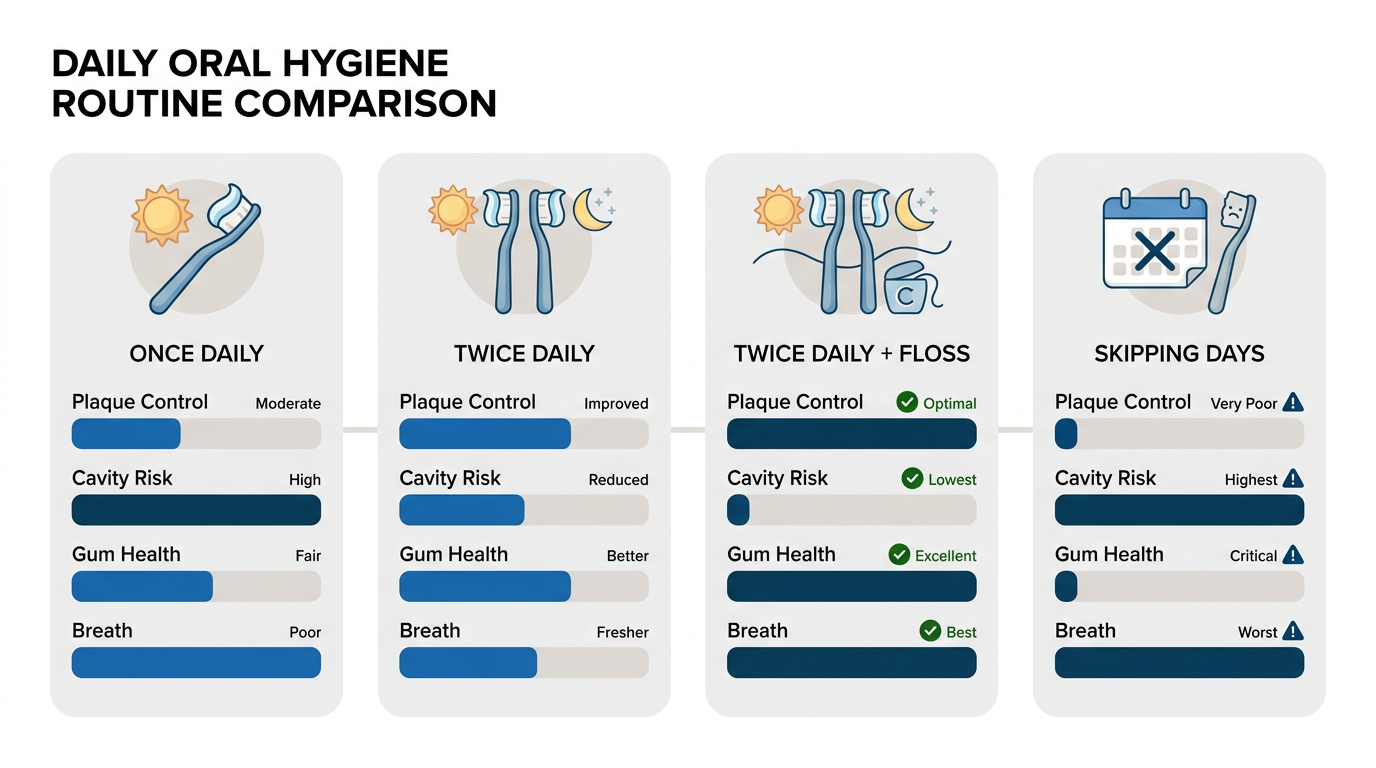 Horizontal infographic comparing four oral hygiene routines across plaque control, cavity risk, gum health, and breath using simple icons and compact bar charts for quick visual comparison. Clean, illustrative design with brand colors and clear labels for each routine and metric.
Busy-Day Solutions: Make Twice-Daily Brushing Doable
Between school drop-offs, work deadlines, and family dinners, finding time for proper oral care can feel impossible. Many parents wonder, "Is it okay to brush your teeth only once a day?" While twice daily remains the recommended approach, these practical strategies can help your family maintain healthy smiles without adding stress to your routine.
- Prioritize nighttime brushing as your non-negotiable clean when saliva production drops during sleep
- Keep travel brushes and fluoride toothpaste in your car or desk for quick two-minute cleanings after coffee
- Bundle family routines by brushing while supervising kids' bedtime or setting shared two-minute timers
- Use time-saving tools like pre-threaded flossers or water flossers for efficient interdental cleaning
- Schedule professional cleanings every six months, or every 3-4 months if you have bleeding gums or recent dental work
The National Institute of Dental and Craniofacial Research confirms that consistent twice-daily brushing with fluoride toothpaste provides the best protection against cavities and gum disease. When home care feels overwhelming, regular professional cleanings and exams become even more important for maintaining your family's oral health. Remember, small consistent steps make a bigger difference than perfect routines you can't maintain.
FAQs: Quick Answers for Real-Life Routines
Busy families often have practical questions about making oral care work with hectic schedules. Here are straightforward answers to help you make informed decisions about your family's dental health routine.
Is it okay to brush your teeth only once a day if I floss regularly?
Flossing enhances your routine but can't replace that second brushing session. Twice-daily brushing provides more consistent plaque control throughout your mouth. Flossing plus once-daily brushing is better than brushing alone, but twice daily is still the gold standard.
Should I invest in an electric toothbrush for my family?
Electric toothbrushes can help achieve 65-86% plaque removal more reliably than manual brushes. They're particularly beneficial for children, teens with braces, or anyone with dexterity challenges. Both work well with proper two-minute technique, but powered brushes often make thorough cleaning easier for busy families.
How often should my family schedule dental cleanings?
Most patients benefit from professional cleanings every six months. However, if anyone has gum inflammation, recent dental work, dry mouth, or orthodontic appliances, consider scheduling every three to four months for added protection and monitoring.
Can mouthwash replace one of my daily brushing sessions?
Mouthwash is a helpful addition to brushing and flossing, but it cannot replace the mechanical action of brushing. The NIDCR recommends brushing twice daily as the foundation of good oral hygiene. Think of mouthwash as the finishing touch, not a substitute for thorough plaque removal.
The Bottom Line—and an Easy Next Step in Bluffton
The evidence is clear: twice-daily brushing with fluoride toothpaste plus daily interdental cleaning gives your family the best protection against cavities and gum disease. While brushing once daily helps, it allows more plaque buildup than necessary for optimal oral health.
Your busy schedule deserves a dental team that makes preventive care convenient for everyone. Dental professionals agree that consistent twice-daily routines work better for long-term results, and we help families stay on track with their oral health goals. Schedule your next cleaning and exam for general dentistry in Bluffton SC at Palmetto Dental Arts to keep your family's smiles healthy and strong.