Key Takeaways:
- Modern dentistry offers a range of advanced, natural-looking solutions for replacing missing teeth, each tailored to fit your unique needs and lifestyle.
- Replacing missing teeth quickly restores your smile and supports your oral health.
- At Palmetto Dental Arts, you can access comprehensive care under one roof, benefiting from in-house specialists, advanced 3D imaging, and flexible financing options to make your tooth replacement journey seamless and stress-free.
Losing one or more teeth can impact more than just your smile. It can affect how you eat, speak, and feel about yourself. Whether it happens due to injury, decay, or age, missing teeth can have a lasting effect on your confidence and oral health. Thankfully, modern dentistry offers several reliable and natural-looking solutions to restore your smile and function.
At Palmetto Dental Arts, we believe every patient deserves a personalized approach to tooth replacement. From dental implants to bridges and dentures, today’s options provide beautiful, durable, and comfortable results that look and feel like real teeth.
Why Replacing Missing Teeth Matters
Before looking into your options, it’s important to understand why replacing missing teeth isn’t just a cosmetic concern.
When a tooth is lost, several things begin to happen:
- Bone loss begins in the jaw where the tooth used to be, leading to facial sagging or changes in your appearance over time.
- Adjacent teeth shift, creating misalignment and bite issues.
- Speech and chewing ability can become impaired.
- Gum tissue may become more vulnerable to infection.
Replacing missing teeth helps preserve your oral structure, protect surrounding teeth, and restore confidence in your daily life. The earlier you seek replacement, the better your long-term oral health outcomes will be.
Replacing Missing Teeth Options
Option 1: Dental Implants
What Are Dental Implants?
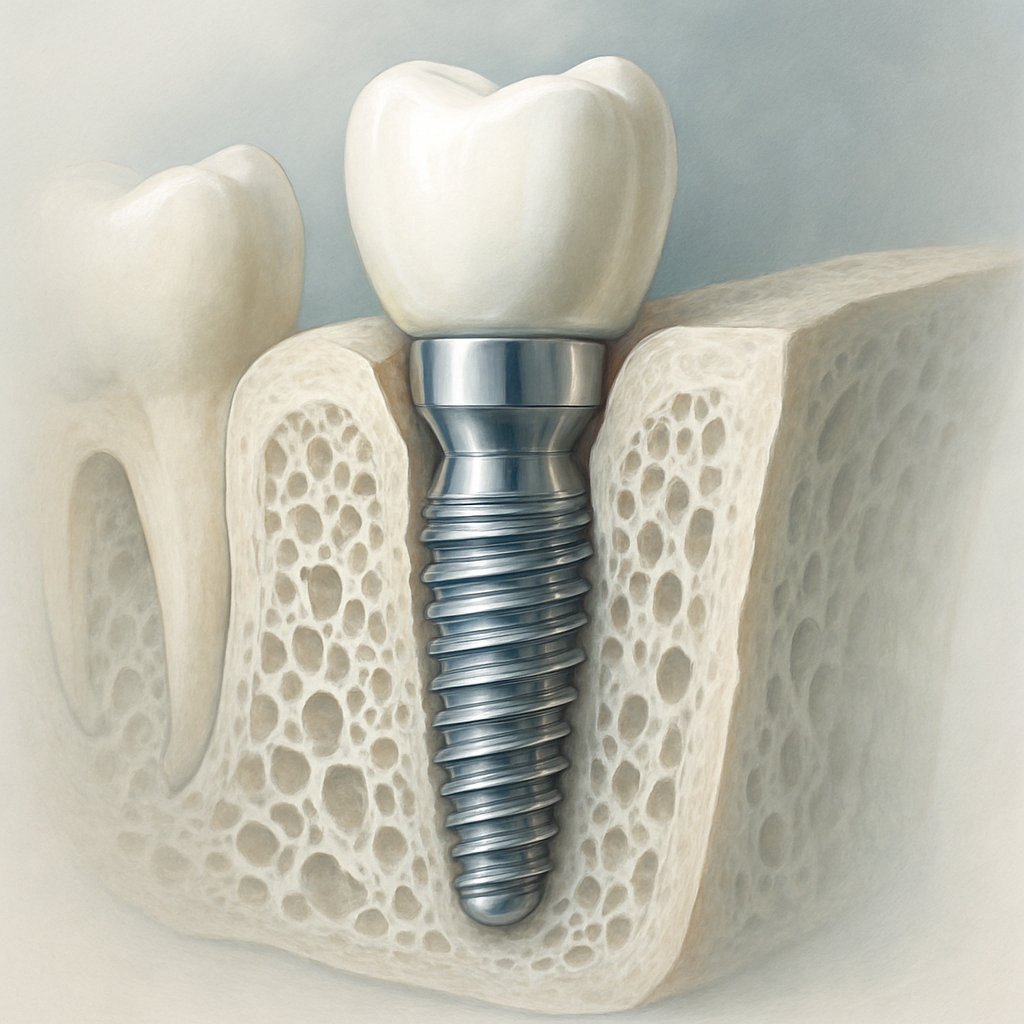
Dental implants are often considered the gold standard for tooth replacement because they most closely replicate the look, feel, and function. An implant consists of a titanium post surgically placed into the jawbone, which acts as an artificial tooth root.
Once it fuses with the bone (a process called osseointegration), a custom crown is attached to complete your restoration.
Implants can replace:
- A single missing tooth
- Multiple teeth (using implant-supported bridges)
- An entire arch (with solutions like All-on-Four implants)
Benefits of Dental Implants
- Natural appearance: Custom-made to match your natural teeth in color, shape, and size.
- Durability: With proper care, implants can last a lifetime.
- Bone preservation: They prevent bone loss by stimulating the jawbone like natural roots.
- Stable function: No slipping or shifting while eating or speaking.
- Low maintenance: Brush and floss like natural teeth; no adhesives required.
Potential Drawbacks
- Higher upfront cost: Implants are more expensive initially but are cost-effective long-term due to their longevity.
- Surgery required: Placement involves a minor surgical procedure and a healing period.
- Time investment: The process may take several months from implant placement to final restoration.
Best Candidates for Dental Implants
Dental implants are ideal for individuals with good oral health, adequate jawbone density, and a commitment to maintaining oral hygiene. Even patients with mild bone loss can often qualify with modern techniques like bone grafting or All-on-Four implants.
Option 2: Dental Bridges
What Are Dental Bridges?
A dental bridge is a non-removable restoration that literally “bridges” the gap left by missing teeth. It typically consists of one or more artificial teeth (pontics) held in place by crowns attached to the healthy teeth on either side of the gap, known as abutment teeth.
Bridges can be made from porcelain, ceramic, or a combination of materials to blend seamlessly with your natural smile.
Types of Dental Bridges
- Traditional Bridge: The most common type, supported by crowns on adjacent teeth.
- Cantilever Bridge: Used when only one neighboring tooth is available for support.
- Maryland Bridge: This type of bridge uses a metal or porcelain framework bonded to the backs of adjacent teeth. It is less invasive but also less durable.
- Implant-Supported Bridge: Anchored directly to dental implants instead of natural teeth, offering enhanced stability and longevity.
Benefits of Dental Bridges
- Quick results: Typically completed in 2–3 visits.
- Cost-effective: Less expensive than implants.
- Aesthetic improvement: Fills gaps to restore your smile and facial symmetry.
- Functional restoration: Helps improve chewing and speech.
Potential Drawbacks
- Requires altering healthy teeth: Adjacent teeth must be filed down to support the bridge.
- Limited lifespan: Bridges generally last 10–15 years before replacement.
- Bone loss risk: Since bridges sit above the gum line, they don’t stimulate the jawbone like implants do.
Best Candidates for Dental Bridges
If you have strong, healthy teeth on either side of a missing tooth, a dental bridge may be an excellent choice, especially if you prefer a quicker, less invasive solution.
Option 3: Dentures
What Are Dentures?
Dentures are removable appliances that replace multiple missing teeth or even a full arch. Modern dentures are far more comfortable and natural-looking than their predecessors, providing patients with renewed confidence and functionality.
Types of Dentures
- Full Dentures: Replace an entire arch (upper or lower) of missing teeth and rest on the gums.
- Partial Dentures: Replace several missing teeth while preserving remaining natural ones, secured with clasps or precision attachments.
- Implant-Supported Dentures: These dentures combine the benefits of dentures and implants, anchored to 2–6 implants for enhanced stability and comfort.
Benefits of Dentures
- Affordable: Generally, the most budget-friendly option.
- Non-invasive: No surgery required.
- Custom fit: Designed to complement your face and restore your smile.
- Improved functionality: Modern dentures allow for comfortable eating and speaking.
Potential Drawbacks
- Less stability: Traditional dentures can slip or shift, especially while eating.
- Bone loss: Without roots or implants, the jawbone can gradually deteriorate.
- Maintenance: Must be removed and cleaned daily.
- Replacement: Typically replaced every 5–8 years due to wear and bone changes.
Best Candidates for Dentures
Dentures are ideal for patients missing most or all teeth who prefer a removable, non-surgical solution. They can also serve as an excellent temporary option while waiting for implants.
Factors to Consider When Choosing the Right Solution
Selecting the best tooth replacement option is a personal decision that depends on several factors. Your dentist will assess your oral health, lifestyle, and goals during your consultation. Here’s what we typically evaluate:
1. Bone Health and Gum Condition
Implants often require sufficient bone density for support. A bone graft or alternative like implant-supported dentures may be recommended if your jawbone has deteriorated.
2. Number and Location of Missing Teeth
A single missing tooth might best be replaced with an implant or bridge, while multiple missing teeth may call for a partial denture or implant-supported bridge.
3. Budget and Insurance
While implants have a higher initial cost, they’re often the most economical long-term solution due to their durability. Bridges and dentures can be more budget-friendly upfront, but may need periodic replacement.
4. Lifestyle and Comfort
Implants or bridges may be ideal if you prefer a fixed solution that feels completely natural. Dentures could be a better fit for those who don’t mind removable options or need a non-surgical approach.
5. Aesthetic Goals
All three options can deliver beautiful, natural-looking results, but implants provide the most realistic appearance and feel.
FAQs About Replacing Missing Teeth
1. What’s the most natural-looking tooth replacement option?
Dental implants provide the most natural appearance and feel since they mimic real tooth roots and integrate with the jawbone.
2. Are dental implants safe?
Yes. Implants are made of biocompatible materials and have a success rate of over 95% when placed by experienced professionals.
3. How long do bridges and dentures last?
Bridges typically last 10–15 years, while dentures may need replacement every 5–8 years due to wear or changes in your jawbone.
4. Can I switch from dentures to implants later?
Absolutely. Many patients start with dentures and transition to implants when ready for a more permanent solution.
5. Will my insurance cover tooth replacement?
Coverage varies by provider and plan. Our team can help you review your benefits and explore financing options.
Ready to Restore Your Smile?
Missing teeth don’t have to hold you back from living confidently. Whether you’re considering dental implants, bridges, or dentures, there’s a personalized solution that fits your needs, lifestyle, and budget.
At Palmetto Dental Arts, we specialize in restoring smiles that are as functional as beautiful. Our team will help you understand your options, walk you through the process, and deliver results that make you proud to smile again.
Schedule your consultation today to learn which tooth replacement option is right for you, and take the first step toward a healthier, more confident future.